What has changed, and what has not, since the closure of supervised consumption site at the Sandy Hill Community Health Centre
Ralph Blaine
The Consumption and Treatment Services Site at the corner of Nelson and Rideau (formerly known as Supervised Injection Site or SIS), that was located inside the Sandy Hill Community Health Centre (SHCHC), closed in mid-June of this year after losing funding from the Ontario Ministry of Health. Three months after the closure, I decided to take an early look at what had changed for some of the clients, neighbours, and staff of the Centre.
But first, let’s look at the changes the supervised consumption site brought to our neighbourhood over the past eight years so we can better judge the post-closure changes in that context.
What was then known as the Supervised Injection Site opened in April of 2018. Even before this opening, the proposal generated a great deal of controversy. Both Mayor Jim Watson and Police Chief Charles Bordeleau announced their objection to the service, citing concerns over public safety and community stability. Many citizens also expressed concern about the impact of such a service in the neighbourhood.
But the SHCHC argued they were responding to a serious public health crisis involving, among other things, a significant number of Ottawa residents dying of drug overdoses.
It didn’t take long to see the impact of the SIS on the Sandy Hill residents living near the SHCHC. Following the opening of the site, clients and other unhoused people had set up a semi-permanent camp across the street. This concentrated population of people who use substances naturally attracted drug dealers and began to form a community.
People living in the neighbourhood began reporting disturbing encounters as they walked by the SHCHC, and Ottawa Police reports showed a substantial increase in crime in Sandy Hill. (See the October 2019 story by Larry Newman) On September 11, 2019, City Councillor Mathieu Fleury called a public meeting to discuss these and related problems and to propose solutions.
Two initiatives proposed at the meeting were implemented with immediate effect. First, it was made clear that no encampments would be allowed near the SHCHC. The Centre also agreed to hire security guards to police the area around their building. It wasn’t long before the TD Bank (now Mary Brown’s Chicken), Ottawa Public Library’s Rideau branch, Loblaws, and Dollarama on Rideau Street all hired their own private security guards.
Meanwhile, those who used substances and got their safe consumption supplies at the SHCHC but chose to inject off-site were soon finding their own spots to consume—backyards, alleyways, vacant lots, even right out in the open. Soon, residents were finding hypodermic needles with their bright orange caps discarded in various locations. Gradually, condo buildings, private residences, businesses, and even churches were constructing fences around their premises to curb the littering, trespassing, and drug consumption on their property.
Between March 2020 and February 2026, Health Canada (www.health-infobase.canada.ca/supervised-consumption-sites/) reported that the Sandy Hill supervised consumption site handled over 97,000 visits from a total of over 19,000 clients.
Now, let’s get down to what I discovered about the situation in Sandy Hill since the closure of the consumption and treatment services site.
Crime rates
I feel I have heard more stories from neighbours than usual this summer about break-ins to cars and houses, stolen bicycles, and strangers entering backyards.
Has crime in Sandy Hill actually gone up since the closing of the site? A check of the Ottawa Police Community Safety Data Portal shows that the number of assaults, thefts under $5000 and mischief for July and August were within the range of the numbers for the twelve months previous to the closing of the program, although they were in the upper end of that range. It is probably too early to draw any clear conclusion at this point. Still, it is worth noting that the crime rate in Sandy Hill did go up substantially after the opening of the site and, so far, has remained at those higher levels since the program was shut down.
The surroundings
I suppose that many people assumed that once the site was shut down, all the problems associated with it would disappear. But the opening of the site didn’t just supervise drug use; it also, albeit inadvertently, created a community which grew around the vicinity of the SHCHC. A police officer I spoke to some years ago explained that unhoused people and those who consume substances were coming to Ottawa from outlying areas to be part of this community, and although its individual members may change over time, the community is still around us. It should also be noted that, although the supervised consumption site has been closed, clients can still obtain harm reduction supplies funded by Ottawa Public Health and the Ministry of Health.
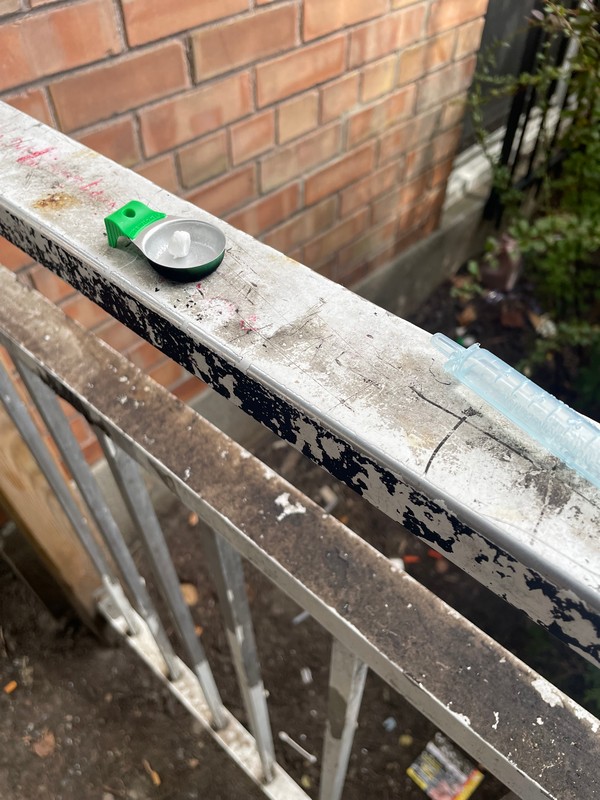
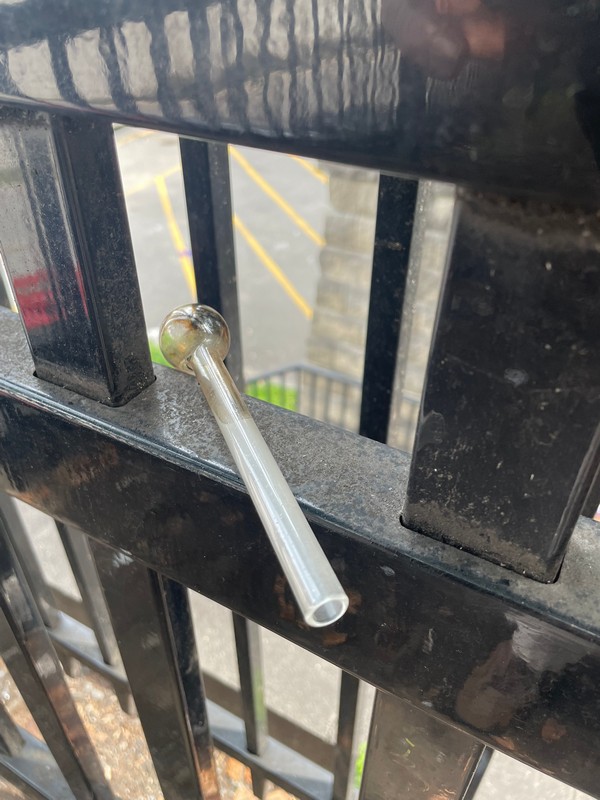
Found by Ralph Blaine on Besserer Street, just across the street from the Sandy Hill Community Health Centre: a drug dose ready to be dissolved and injected, as well as a syringe and bubble pipe, both available at the Sandy Hill Community Health Centre.
The clients
In the first week of September, I asked two people outside the SHCHC about the changes they had experienced since the closure of the site.
The first person I spoke to explained that she had never used the Centre’s supervised consumption site because she didn’t inject. Not much had changed for her because she could still get clean “bubbles” (glass pipes for smoking drugs) from the SHCHC.
Alicia was the second person I spoke to. She was sitting on the pavement bordering the SHCHC and unwrapping the syringe she had just obtained there. Alicia said she had been a client of the supervised service and regrets its closure. She said she doesn’t like injecting in public as she waved her hand in the direction of a bent-over man in the street, adding that the area around the SHCHC has become dirtier and more strewn with injection debris since the closure of the site. She also pointed out that the personnel in the supervised clinic encouraged the clients to stay in the building for a time after injecting until they felt ready to leave. But now people who inject on the street sometimes fall almost comatose to the ground. They are then easy victims of theft or even violence from people who claim they are owed money. Alicia also says she sees more overdoses outside the clinic since the closure of the supervised clinic.
The staff
I spoke to two employees from social service organizations that collect needles and do community outreach. They reported seeing an increase in the number of drug consumption supplies that have been left on the streets, sidewalks, yards, etc. I also spoke to an employee of the SHCHC who said that there had been an increase in ambulance calls since the closure of the supervised site.
Dean Dewar had been involved with the CTS site for a little over a year when it was closed down. He is now Director of Community Engagement and Outreach at the SHCHC. He explained that those who wish to obtain safe drug consumption equipment must register with the SHCHC.
Each of these registered clients is given an anonymous code which enables them to access equipment as needed. Dewar made the following statement about the services now provided to his clientele at the SHCHC:
“Harm reduction supplies [meaning hypodermic needles, tourniquets, etc.] distributed throughout Ottawa are funded through Ottawa Public Health and the Ontario Ministry of Health. Funding through the AIDS Bureau supports our Junction Worker, who assists people in accessing supplies while also providing harm reduction education, service navigation, and basic-needs support. In July, there were 3066 interactions at our site, supporting approximately 1088 individuals. This number has significantly increased since the closure of the SIS.
“We remain open to, and actively encourage, ongoing dialogue with residents, businesses, community partners, and other stakeholders. This includes opportunities such as the Sandy Hill Community Liaison Committee, our participation in multiple outreach and municipal tables, and direct conversations with community members who reach out to us with questions or concerns.”
Dewar also assured me that the SHCHC will continue to employ security guards.
So what has changed around the SHCHC since the closure of the CTS?
Supervised injections at the SHCHC have stopped; there is more litter and drug paraphernalia scattered around our neighbourhood; there are more ambulances called to treat drug consumption emergencies; and there are more people injecting drugs in public.
What has not changed
The gathering of people who use substances is still in place and the dealers still have their clientele; the SHCHC still provides access to counselling and harm reduction equipment; the crime rate in Sandy Hill has remained higher than what it was before the opening of the supervised site; there will continue to be security guards around the SHCHC.
After going over this list while talking with Dewar, I summed it up by saying: “It seems like the situation after the site closure has actually gotten…” and he took the words right out of my mouth, finishing my sentence with “worse, much worse.” It’s hard to disagree.
Have those people who campaigned with such fervour against the supervised consumption site funding scored an own goal?
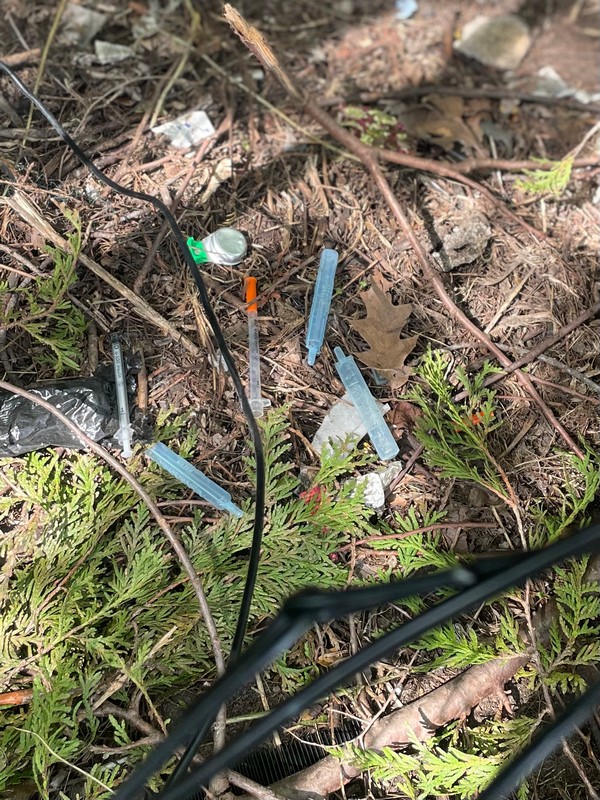
Photo: Ralph Blaine