Two new books of timely tales
Maureen Korp
Not long ago, the Canadian and Turkish Women’s Association of Ottawa (CATWAO), gathered a marvelous lot of women together for the International Women’s Day Market at the Glebe Community Centre. The Market included all sorts of local goods—clothing, jewellery, artisanal work, foods, books—all on offer. The vendors, for the most part, were the artisans themselves. Two tables had attractive displays of self-published books by Ottawa authors Christine Kilfoil and Miss Rocket; they were there, too! Delightful conversations with both began in those moments.
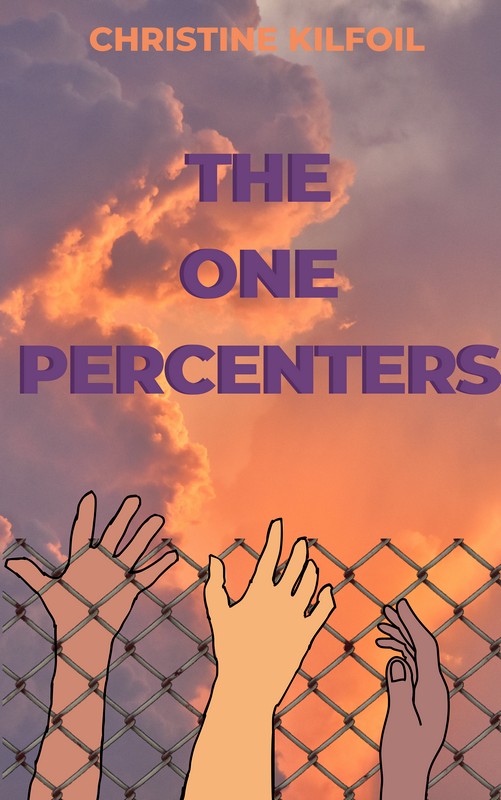 Christine Kilfoil’s novel,The One Percenters, is a page-turner, a thrilling tale of near-at-hand possibilities. Try and Thrive by Miss Rocket is a handbook of self-purpose. It is in fact, two books. More of that later.
First, we look at Christine Kilfoil’s novel. The One Percenters is the story of two sets of siblings unknown to one another until they cross paths. Somewhere on the road in California, Ellen and Brendan are looking for their brother Michael. Was he picked up by the Bluecoats?
The border between the US and Canada is closed. Nevertheless, siblings Jay and Harry have managed to slip through. Coming over from Vancouver, they were making their way to California in search of their mother when Harry was grabbed by the Bluecoats. Where is he now?
But, who are the Bluecoats? Why is the border closed? One Percenters, the wealthiest Ones among us, make the rules everywhere in these post-pandemic days. How so? Ones control monies, supplies, social media, and search engines. Ones are everywhere. We do not see them; they see us. Bluecoats are their enforcers. Spy pods float above.
These are days of disarray. Newfoundland and Alberta have separated from Canada. The U.S. is bankrupt. Comb-Over remains titular head-of-state. In the words of an old Buffalo Springfield song of the 1960s, “Step out of line, the man come and take you away.”
Is there resistance? Yes, of course. Jay, the Canadian, writes “The Beacon,” an underground zine. Ellen, the American, proves adept at throwing rocks. Sandeep is shrewd; he sees every possibility for it all. Yet great numbers of people are being held in detention camps, others carted away to far-off lands as captive labour. When someone is killed trying to escape, Comb-Over calls it “good TV.” In the hands of a reputable publisher, Christine Kilfoil’s enthralling book could be a bestseller. Indeed, its plot line has the makings of a blockbuster movie.
Alas, The One Percenters is not well served by having been self-published. It lacks a title page and its back cover descriptive text is too small to be read easily, among other presentation problems. Good writers cannot be their own editors, book designers, publicists, and publishers too. Let others do that work; may there be a second edition. In the meantime, readers will find Kilfoil’s story in Ottawa’s bookstores.
 Now we look at Try and Thrive by Miss Rocket, the author’s pen name. Writing with clarity and humour, Miss Rocket sources the story of her life to illustrate five “pillars” underpinning the structure of self-confidence. The first three chapters make their case well. Miss Rocket’s argument for financial education as well as philosophy, math, and logic in the high school curriculum is sound. But life is not all books in the library.
We the readers soon learn Miss Rocket, born and raised in France, is of Armenian heritage. The second chapter, “Sports Strength in Motion” is the story of her athletic endeavors. She becomes an Olympian, carrying the flag of Armenia in the 2002 Winter Olympics. The third chapter, “Career—A Future in the Making,” relates with wry humour the back-and-forth of visa applications and border crossings, all the while roller-blading to job interviews. The first three chapters of Try and Thrive are stories with wide appeal. The fourth and fifth chapters however, belong to another book. In my opinion, the author should tell the story when the child is grown and grants permission for its telling. As Miss Rocket herself states on page 254, “Letting go isn’t a sign of weakness—it’s a radical act of strength. Let go of those who hurt you.”