Snowbanks: A blueprint to a better neighbourhood
Patrick Munro
Driving down a narrow, two-way street, without lane markings, close to parked cars, and facing head on with another vehicle seems like an undesirable situation. The potential for a collision and limited room to maneuver results in the natural instinct to slow down and carefully take note of your surroundings. This is the reality that drivers, pedestrians, and cyclists face every winter on the streets of Sandy Hill.
Over the past few months, I have been reflecting on the experience of walking, cycling, and driving in different seasons. In the summer, it is common to see drivers race down residential streets to make a green light, run stop signs to beat an approaching pedestrian, or make unsafe passes of stopped delivery vehicles. However, this all changes during the winter months as grip is low, space is constrained, and risk is elevated.
I appreciate the arrival of snowbanks as they provide a physical buffer between the chaos of the street and the tranquility of a stroll. The reduced visibility results in drivers leaving much more room for error at intersections, proceeding single file past parked cars, and lowering speeds in anticipation of obstacles. The challenging conditions encourage responsibility as space and sightlines are limited, which reduces the sense of security behind the wheel.
The contrast is particularly noticeable when the snow removal teams truck away the snowbanks in an overnight operation. You go to sleep with narrow, traffic-calmed roads, and then wake up with clear sight lines, wide lanes, and higher traffic speeds. This change in behaviour leads to the conclusion that when space is limited, people share space accordingly, and when space is generous, people take more risks.
Every winter, snowbanks provide a template on our streets showing the space that is necessary to get around, even when driving big trucks or buses, and the space that sits empty for months. This extra space is underused during the summer by asphalt that retains heat on sunny days and displaces water into our rivers and parks on rainy days. Urban areas like ours struggle to find space for nature or shade, but the space used for snow storage during the winter can also be used to make our streets safer and more beautiful during other seasons.
Repurposing some of the space taken up by snowbanks into more productive uses can help our neighbourhood adapt to the demands of more extreme weather while making our streets more pleasant. Replacing gutters with rain gardens and street trees, laybys with bike racks or benches, and wide corners with pedestrian curb extensions would greatly reshape the way we all move about our community.
These changes are not hypothetical. Walk along Stewart between Nelson and King Edward to see a rain garden and wider sidewalks. In the coming years and decades, our local streets will be due for renewal. It is not my goal to prescribe any specific use of the street space, but to encourage neighbours to think creatively about the use of space on our streets and how we could improve them when the opportunity presents itself.
In a community where most people don’t drive often or at all, it is crucial that we look for ways to improve the experience of everyone outside while still providing access for those who need to drive. These changes may result in narrower streets, slower speeds, and more obstacles, but if we use the blueprint shown every winter by the snowbanks, we can achieve safer, better, and more beautiful streets for us all to enjoy!
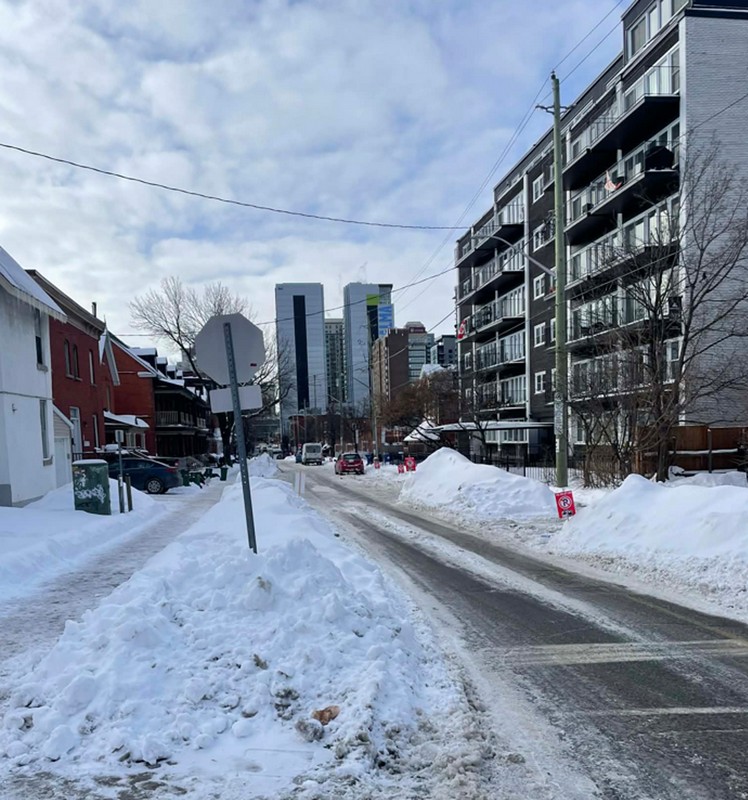
Photo: Patrick Munro
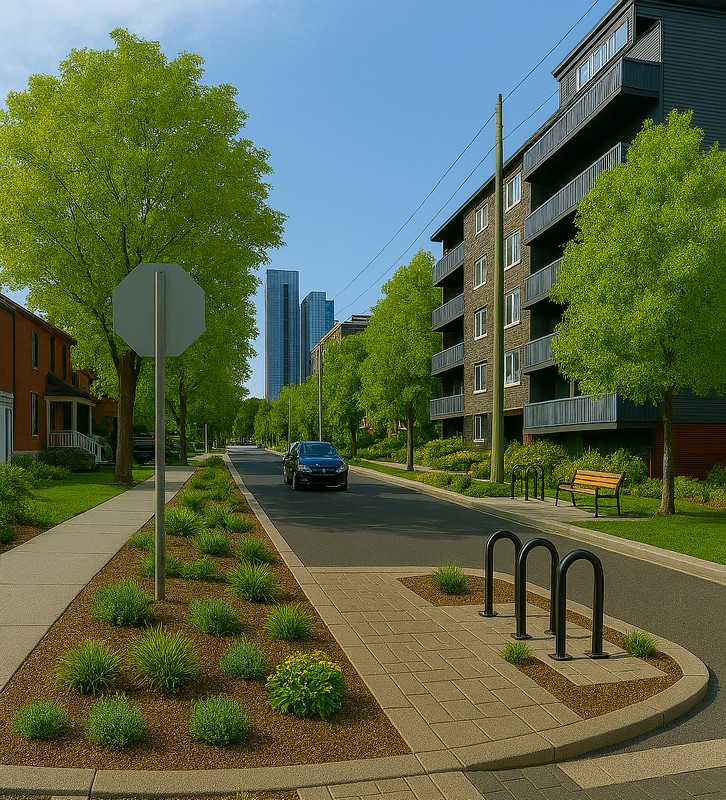
Illustration: Patrick Munro using ChatGPT