Leading differently on The Other Hill
Frédérique Tsai-Klassen
On March 10, more than 200 women from across Canada’s political ecosystem gathered here in Sandy Hill at allsaints event space for the Ottawa launch of Power Shift—Women Redefining Leadership in Canada.
The evening, Leading Differently: Women, Power & Politics, took place just steps from Parliament, in a neighbourhood that knows public life intimately. Sandy Hill has long been home to parliamentarians, public servants, students, and civic leaders. It felt fitting that a national conversation about leadership culture would begin here.
Canada is at a hinge moment. Democratic strain, polarization, geopolitical uncertainty, and declining public trust are reshaping public life. Meeting the scale of this moment requires more than policy and capital. It requires institutional capacity, and institutional capacity depends on how leadership is structured, sustained, and renewed.
Women are stepping into positions of authority across Parliament, the public service, advocacy, and media not as symbolic figures, but as decision-makers and institution builders.
Yet leadership culture is not a soft variable, it is a strategic asset. If institutions are to translate capital, policy, and political will into long-term national advantage, the structures that define authority must evolve to sustain women’s leadership, not merely accommodate it.
The question we gathered to explore was simple but consequential: what does leadership look like when women define it on their own terms, and what must change for that leadership to scale?
MP Karina Gould spoke candidly about serving in the federal Cabinet while raising two young children, advancing transformational policy—including Canada’s $10-a-day child care system—while navigating the intersection of public responsibility and family life.
Ketty Nivyabandi, Secretary General of Amnesty International Canada, reflected on confronting power, from resisting political violence in Burundi to building credibility and influence within Canadian institutions.
Anne McGrath, former principal secretary to Alberta’s first woman premier, offered insight from inside the “engine room” of governance, how power is structured, sustained, and negotiated over time.
MP Chi Nguyen shared her journey from leading Equal Voice to stepping into elected office and the courage required not only to enter public life, but to remain.
This was not a symbolic conversation about women in politics. It was a serious examination of how power is structured, how talent is retained, and whether Canada is intentionally scaling women’s authority inside the institutions that determine our resilience.
As a board member of The Other Hill and Co-Founder of The Power Shift Series, I was struck by how naturally this conversation belonged here.
The Other Hill exists to cultivate a civic commons, a place where dialogue lives, where leadership is examined seriously, and where questions about how we govern are rooted in community and place.
Democratic renewal does not happen only inside parliamentary chambers. It also happens in neighbourhoods willing to host thoughtful, rigorous conversations about power and responsibility.
If Canada intends to execute on its ambitions, leadership culture must be treated as part of national strategy. That conversation began here, on The Other Hill.
For more information about The Power Shift series visit: https://thepowershiftseries.ca/ and for information on The Other Hill initiative visit: https://theotherhill-lautrecolline.ca/
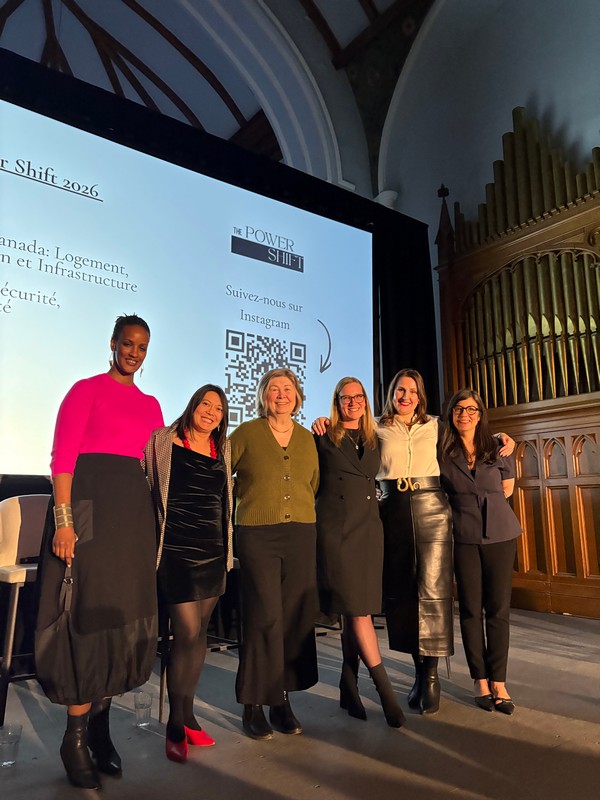
Photo: Mary-Michelle Brown