Ken’s Bygone Sandy Hill
The Town House Motor Hotel was an Ottawa hotspot
Ken Clavette
While researching the history of the Nelson/Bytowne Theatre for the summer issue, I discovered some information about the Days Inn next door. A neighbour who spent years working at the motel suggested I devote my next column to the story of that storied establishment.
The automobile revolution offered people newfound freedom to travel away from the railway routes. This created a demand for new types of accommodation. Initially, motor campgrounds met this need, but soon a new form quickly emerged: the motor inn. Beginning in the mid-1920s, motor inns combined hotel comforts with recreational facilities. Located just outside city centres, they offered guests the convenience of parking directly outside their rooms.
Ottawa featured several motor inns, often situated along highways leading into the city. Prince of Wales Drive hosted a number, Carling Avenue had the Town and Country, and Montreal Road was home to the Butler Motor Hotel. The Butler family began with a gas station in the 1920s and built their motel in response to the growing number of travellers stopping for fuel. They operated the motel until the mid-1970s.
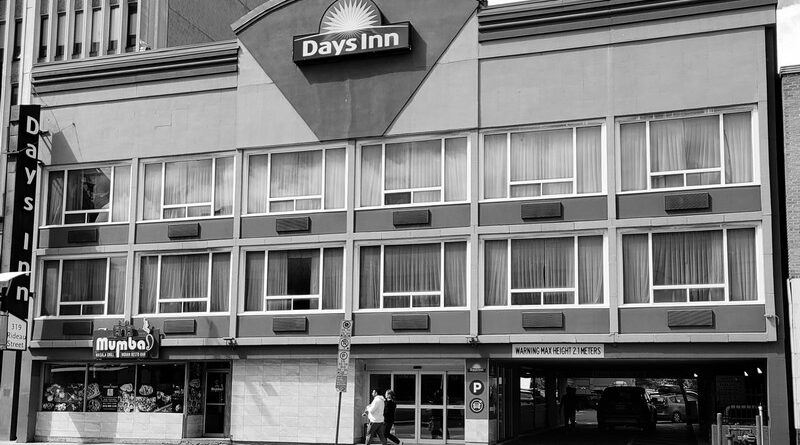
 The Town House Motor Hotel stood apart, situated in the city centre just five blocks from Parliament. It shared a close connection with the Nelson Theatre next door. Morris Berlin, founder of the theatre, also envisioned the Town House. In 1960, he demolished the family’s cleaning business, replacing it with a modern motor inn. Although today the site is known as Days Inn, Berlin’s original concept was quite different.
Architect George Bemi designed the Town House as a stylish, modern motor court. Its interior decor was crafted by Ottawa’s top commercial designer, Gordon Forrest. Berlin wanted the very best: “the Town House had to be Ottawa’s most outstanding motor hotel; every room, every curtain, every chair had to be just right,” reported The Ottawa Journal on November 28, 1961.
Berlin aimed “to build a Motor Hotel befitting the Nation’s Capital, where guests would enjoy the art of gracious living and dining.” The inn featured drive-in registration as an option for guests. The sixty rooms were richly carpeted and ranged from singles to deluxe suites, each decorated in French Provincial, Scandinavian, or Oriental styles. The bridal suite was a “symphony of white and gold.” All rooms were air-conditioned and equipped with a new novelty, a coffee maker. Additional amenities included hideaway ironing boards, a coin laundry, and one-day dry cleaning—especially convenient for business travellers. Bathrooms in deluxe suites had coloured fixtures and matching phones, and guests could choose between hard and soft pillows.
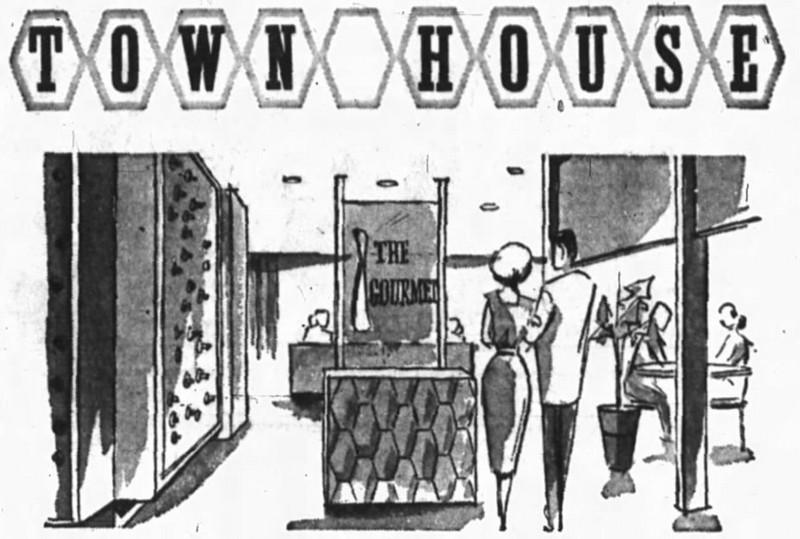
The Town House offered an uptown atmosphere that extended beyond accommodations. “The Gourmet Room” on the ground floor delivered a unique dining experience with a BBQ pit, lobster tank, and shish kebab served on miniature swords that guests could take home. The banquet room, accommodating 125 people, was ideally suited for weddings, club and community events. Berlin offered his space to the newly formed “Ottawa Gourmet Society,” which had been inspired by similar groups in New York City and San Francisco. He offered seven-course meals served alongside complimentary wine and beverages. In the 1970s, the Town House also hosted women’s-only dances for “Lesbians of Ottawa Now.”
The “Nailhead Lounge” quickly became an Ottawa hotspot, named for its unique mural by local artist David Partridge—thousands of nails of all sizes and colours hammered into plywood. Guests could enjoy food or drinks before attending a movie next door, entering the theatre via a side entrance that also served as a fire escape. The balcony exit led directly to the lounge; a convenient feature especially appreciated during Ottawa’s winter months.
By the end of the 1970s, shifts in hotel taste, dining and moviegoing habits meant the Town House no longer fulfilled Morris Berlin’s original vision. Ownership changed, and the property is now the Days Inn by Wyndham, managed by Tasico Hospitality. Yet the Town House remains a memorable part of Sandy Hill’s history—a place where for a time, everyone wanted to be.
Ken’s Fun Fact
2025 marks the 100th anniversary of the “Motel.” It’s been a century since the “Milestone Mo-Tel,” opened on December 12, 1925, in San Luis Obispo, California. This was the original “motor hotel,” combining convenient roadside lodging with parking for automobiles, catering specifically to the needs of road travellers with the growing use of cars. The term “motel” is a blend of “motor” and “hotel,” reflecting this innovation in travel accommodation.
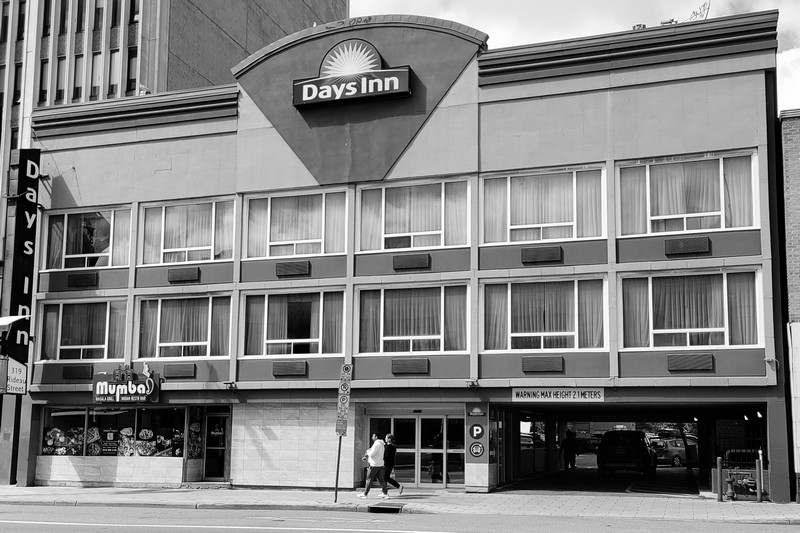
Photo: Ken Clavette